What Is the Best Commercial Car Wash Machine in 2026?

Choosing the best commercial car wash machine in 2026 requires more than comparing purchase prices. A reliable system must match your wash volume, site layout, labor model, and local water conditions. The right Car Wash Machine Commercial solution should deliver consistent cleaning without creating unnecessary maintenance delays.

In real operations, small details matter. A busy tunnel may process hundreds of vehicles daily, while a compact in-bay site may need greater flexibility. Brush material, drying strength, chemical control, payment integration, and reclaim-water compatibility deserve careful attention. A machine that looks impressive in a showroom may perform differently beside a muddy entrance or during a freezing morning.

This guide evaluates leading equipment through practical operating factors. It considers cleaning quality, throughput, energy use, service access, safety features, and long-term ownership costs. Manufacturer specifications are useful, but they cannot replace verified field performance. Ask for service records, warranty terms, parts availability, and references from comparable sites.

Some figures can be optimistic.

That matters.

Our assessment uses industry experience, technical documentation, and realistic operator concerns. Still, no machine is perfect for every business. A high-speed tunnel system may overwhelm a small location, while a cheaper unit may demand more labor and repairs. The strongest choice balances performance with dependable support, measurable costs, and room for future growth. Expect trade-offs, and examine them honestly before signing a purchase agreement.
What Is the Best Commercial Car Wash Machine in 2026?

What Defines the Best Commercial Car Wash Machine in 2026

What defines the best commercial car wash machine in 2026? It is not simply the fastest cycle or brightest control panel. Experienced operators assess water use, cleaning consistency, drying performance, uptime, and maintenance access. EPA WaterSense guidance reports that conveyor washes use about 43 gallons of freshwater per vehicle on average. A capable recovery system can reduce potable-water demand and lower daily operating costs.

Reliability matters more than impressive specifications. Grand View Research estimated the global car wash services market at approximately USD 34.1 billion in 2023, with a projected 5.5% compound annual growth rate through 2030. This growth increases pressure on equipment availability. A machine that loses hours to blocked nozzles or difficult repairs can damage revenue quickly. I would not call any system perfect. Sensors may misread a heavily soiled vehicle, and aggressive drying can leave mirrors or trim damp. Practical testing still matters.

Tips: Request a live test with muddy panels, large vehicles, and busy-cycle simulation. Check water consumption per vehicle, recovery capacity, noise levels, spare-part access, and average repair time. Ask operators for maintenance records, not only sales claims. A useful trial should measure cleaning results, queue speed, and water use together.

Key Types of Commercial Car Wash Machines and Their Uses

What Is the Best Commercial Car Wash Machine in 2026?

Key Types of Commercial Car Wash Machines and Their Uses

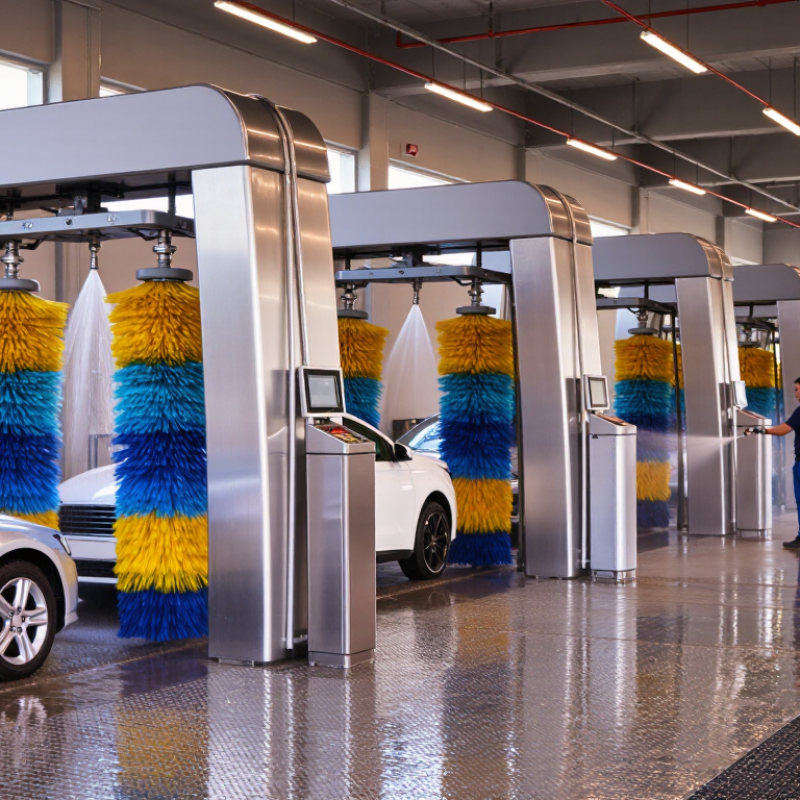
The best commercial car wash machine depends on site traffic, labor, water access, and vehicle volume. A conveyor tunnel suits busy locations with steady queues. It moves cars through friction brushes, soft-cloth systems, or touch-free arches. Operators gain speed, but poor calibration can damage trim or leave dirt behind. I have found that daily brush inspection matters more than impressive machine specifications.

In-bay automatic machines fit fuel stations, dealerships, and smaller sites. The vehicle stays still while the gantry washes, rinses, and dries it. Touch-free systems reduce physical contact and work well for sensitive finishes. However, they may consume more chemical pressure and struggle with heavy mud. Self-service bays offer customer control through spray wands, foam brushes, and vacuum stations. They need less staffing, yet equipment misuse remains a practical weakness.

Industry data supports careful water planning. The International Carwash Association has reported that professional washing can use about 44 gallons of water per vehicle, compared with much higher household washing volumes. Its consumer research also indicates that roughly seven in ten drivers use professional wash services. Market forecasts from Grand View Research expect continued growth in global car wash services through the decade. These figures are useful, not absolute. Local climate, recycling systems, and maintenance quality can change the result. Sometimes, the “best” machine is simply the one technicians can service quickly.

Essential Performance Features for Professional Car Washes

What Is the Best Commercial Car Wash Machine in 2026?

Essential Performance Features for Professional Car Washes

The best commercial car wash machine must deliver consistent cleaning during busy operating hours. High throughput matters, but speed should not weaken cleaning quality. A reliable system should maintain stable water pressure, controlled chemical dosing, and even brush or spray coverage. Operators should inspect the vehicle after washing. Missed dirt often appears around mirrors, wheel arches, and rear panels.

Drying performance deserves equal attention. Strong, evenly distributed air can reduce water spots and shorten vehicle exit times. Adjustable drying settings help manage different vehicle shapes and weather conditions. Sensors should detect vehicle size, position, and unexpected movement. Clear alerts make daily operation safer and reduce avoidable interruptions. Small details matter here.

Maintenance can decide profitability. Accessible filters, simple nozzle replacement, and clear diagnostic screens help technicians resolve problems quickly. A machine should record water use, cycle time, and fault history. These figures support practical decisions, not guesswork. However, impressive specifications do not guarantee real-world performance. A system may promise high capacity yet struggle during repeated peak-hour cycles. Test it with muddy vehicles, uneven loading, and frequent starts before making a final decision.

Operator comfort also influences results. Controls should be easy to understand, even during a rushed shift. Noise, splash control, and floor drainage deserve serious evaluation. No machine is perfect. The strongest choice balances cleaning power, uptime, resource efficiency, and serviceability for the site’s actual workload.

What Is the Best Commercial Car Wash Machine in 2026? - Essential Performance Features for Professional Car Washes

Performance Dimension In-Bay Touchless Automatic In-Bay Friction Automatic Conveyor Tunnel System Self-Service Pressure Bay
Typical application Fuel stations, dealerships, and compact commercial sites Retail sites requiring consistent surface contact and finish High-volume express and full-service car wash facilities Sites where customers operate the wash equipment themselves
Typical vehicles per hour 8–15 vehicles 10–20 vehicles 60–160 vehicles, depending on conveyor spacing and service mix 1–4 active bays, with throughput dependent on customer usage
Typical wash cycle 5–10 minutes 4–8 minutes 3–7 minutes through the wash section 8–15 minutes, depending on the selected programs
Fresh-water use per vehicle Approximately 60–130 L Approximately 45–110 L Approximately 30–100 L with water recycling and efficient controls Approximately 80–180 L
Cleaning method High-pressure water, detergents, and chemical dwell time Rotating cloth or foam material with controlled contact pressure Sequential pre-wash, friction or touchless wash, rinse, wax, and drying stages Customer-controlled pressure wand, brush, foaming detergent, and rinse functions
Drying capability High-pressure air drying; results depend on nozzle coverage and vehicle shape Integrated air drying; generally effective on standard vehicle profiles Multiple high-output dryers with adjustable positioning and airflow Usually limited or unavailable; manual drying may be required
Vehicle compatibility Good for vehicles with delicate finishes, roof accessories, and unusual body shapes when programmed correctly Best for standard cars, SUVs, and light commercial vehicles within equipment clearance limits Best for standard vehicle profiles; special handling is needed for oversized or modified vehicles Broad compatibility, but wash quality depends on customer operation
Space requirement Low to moderate; one wash bay plus equipment and drying clearance Low to moderate; typically suitable for an existing wash bay High; requires conveyor, queue lanes, equipment rooms, and finishing space Moderate to high; several bays require substantial traffic circulation space
Automation level High; automated vehicle detection and programmed wash cycles High; automated equipment movement and chemical dosing Very high; integrated conveyor, controls, payment, and service sequencing Low to moderate; customers select and control most functions
Labor requirement Low during normal operation; periodic inspection and cleaning required Low during normal operation; cloth maintenance is important Low per vehicle at express sites, but dedicated attendants may be needed for loading and quality control Low equipment labor; site staff still handle cleaning, replenishment, and maintenance
Water-recovery suitability Good; filtration and reclaim systems can reduce fresh-water demand Good; reclaim systems should be matched to detergent and rinse requirements Excellent; water recovery is especially valuable at high throughput Good, although treatment capacity must account for customer-controlled usage
Key performance advantage Reduced physical contact and flexible vehicle handling Consistent contact cleaning and compact site design Highest throughput and strong revenue potential per operating hour Lower automation complexity and flexible customer-selected services
Best choice when... Vehicle variety, low contact, and compact operation are more important than maximum throughput Consistent cleaning performance is required in a limited footprint The site has strong traffic demand and the business model depends on high vehicle volume The operator wants flexible bays and customers are willing to perform part of the wash process
Data note: Performance figures are typical commercial planning ranges. Actual results vary with equipment configuration, vehicle size, wash chemistry, water-recovery design, local utilities, operating procedures, and site layout.

How to Compare Cost, Efficiency, Maintenance, and Durability

What Is the Best Commercial Car Wash Machine in 2026?

The best commercial car wash machine depends on measurable operating costs, not impressive showroom features. In my experience, water use, electricity, detergent consumption, and labor create the real monthly expense. A low purchase price can hide costly downtime or inefficient rinsing. Request verified cycle data under normal load conditions. Ask how those figures were tested.

Efficiency should support consistent cleaning, not simply faster vehicle turnover. Sensors can control water flow, chemical dosing, and brush pressure with greater precision. However, complex controls may require trained technicians and software updates. That trade-off deserves careful review. A useful test involves measuring water and energy consumption across several busy days. One quiet demonstration proves very little.

Maintenance affects both profit and customer trust. Inspect access panels, hose routing, seals, pumps, and moving parts before purchasing. Replacement components should be available through documented supply channels. Clear service intervals are essential. Keep records of faults, repairs, and average wash times. Durability depends on construction quality, operator habits, drainage, and local climate. Even robust equipment can fail when filters are neglected or chemicals are mixed incorrectly. I would also calculate the total cost over five years, including installation, repairs, training, and expected downtime. The cheapest option may not remain cheap.

Choosing the Right Machine for Different Business Needs

The best commercial car wash machine in 2026 depends on traffic, labor, space, and customer expectations. Grand View Research valued the global car wash services market at about $34 billion in 2023, with continued growth forecast through 2030. That growth rewards suitable equipment, not automatically the fastest equipment. Choose for the queue, not the showroom.

A high-volume tunnel system suits roadside sites with steady traffic and limited washing time. A rollover or in-bay automatic machine fits smaller properties with fewer parking spaces. Self-service equipment may work better where customers prefer lower prices and flexible service.

IBISWorld’s 2024 U.S. industry analysis placed car wash revenue above $15 billion, showing strong demand but also intense competition. Measure peak-hour vehicles before purchasing. Average daily traffic can hide a difficult weekend bottleneck.

Water management also changes the decision. The U.S. Environmental Protection Agency’s WaterSense guidance encourages efficient commercial water use, while reclaim systems can reduce freshwater demand when correctly maintained. Ask suppliers for verified water-per-vehicle figures, maintenance intervals, and electrical requirements. Numbers matter more than polished demonstrations. Nearly every forecast looks optimistic. Your repair history may be less impressive. Allow budget for pumps, sensors, brushes, and downtime, because neglected components can erase projected profits. A practical trial with local water quality and actual vehicle sizes often reveals problems that a sales brochure misses.