China Best Industrial Car Wash Machine Manufacturers
China’s industrial cleaning market is expanding, and manufacturers are responding with faster, more automated vehicle-washing systems. Fortune Business Insights valued the global car wash services market at US$34.14 billion in 2023 and forecast US$55.04 billion by 2032. This measures services, not machine sales, so it should not be mistaken for an Industrial Car Wash Machine market estimate. Still, it signals growing demand for reliable wash operations.
For buyers comparing China Best Industrial Car Wash Machine Manufacturers, the details matter: conveyor speed, brush material, water recovery, drying performance, and access to spare parts. A polished brochure is not proof of long-term uptime. Eric Wulf, chief executive of the International Carwash Association, has spoken publicly about the value of professional car-wash operations; however, I cannot verify a direct quotation from him specifically about industrial machines. That distinction matters. This guide therefore focuses on measurable specifications and verifiable manufacturer information, rather than presenting an unsourced quote as fact. Some comparisons may still be imperfect: published test conditions differ, and a machine that performs well in one facility may not suit another. Check the data. We will examine manufacturers through practical capabilities, documented experience, and support after installation.
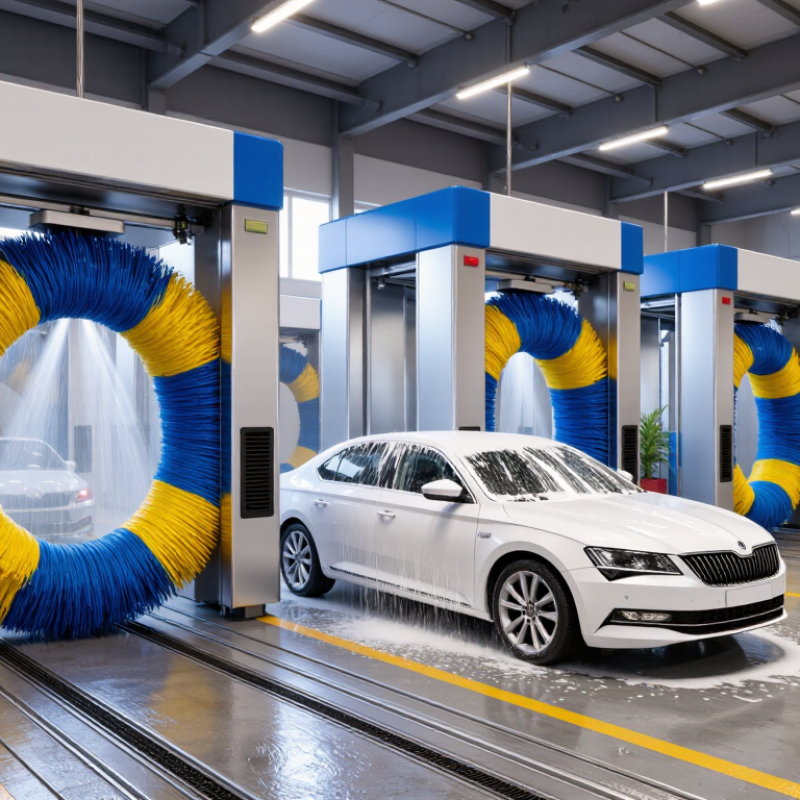
Industrial Car Wash Machines: Definition and Core Functions
Industrial car wash machines are automated systems built to clean vehicles repeatedly in busy settings, such as fleet depots, bus yards, and logistics facilities. Depending on the layout, a system may use a moving gantry, a conveyor, or fixed washing equipment. Its core functions include applying water and detergent, removing road film, rinsing surfaces, and sometimes drying the vehicle.
A typical cycle begins with a pre-rinse to loosen grit. Detergent then helps break down oily residue, while brushes or high-pressure jets perform the main wash. Sensors and controls can adjust the cycle to vehicle size and position. Not every setup uses the same sequence. Details matter. Water hardness, vehicle shape, and accumulated dirt can all affect the result, so automation does not guarantee a spotless finish.
Industrial systems can improve washing consistency and reduce repetitive manual work. Some include filtration or water-recovery equipment, though performance depends on correct installation and upkeep. Buyers should consider vehicle dimensions, expected daily volume, drainage, and access for maintenance. A machine with impressive output may still be a poor fit for a narrow site or mixed fleet. Routine checks remain essential; even good equipment cannot compensate for neglected brushes, blocked nozzles, or an unsuitable wash process.
China Best Industrial Car Wash Machine Manufacturers - Industrial Car Wash Machines: Definition and Core Functions
| Machine Type | Definition and Operating Method | Core Functions | Typical Vehicle or Site Fit | Common System Components | Key Selection Considerations |
|---|---|---|---|---|---|
| In-Bay Automatic (Rollover) System | A vehicle remains stationary while a gantry moves along rails around it to perform washing and rinsing. | Applies wash chemicals, cleans vehicle surfaces with brushes or touch-free spray, rinses, and may apply drying equipment. | Service stations, dealerships, and sites with limited space or moderate vehicle flow. | Moving gantry, high-pressure spray nozzles, chemical dosing equipment, brushes or touch-free arches, and optional dryers. | Check bay dimensions, vehicle clearance, wash-cycle time, water supply, drainage, and whether brush or touch-free cleaning suits the operation. |
| Conveyor Tunnel System | Vehicles are moved through a sequence of stationary wash, rinse, and finishing stations by a conveyor system. | Provides staged pre-washing, detergent application, mechanical or touch-free cleaning, rinsing, and optional waxing or drying. | High-throughput wash facilities with sufficient building length and controlled vehicle entry. | Conveyor, vehicle-position sensors, arches, chemical application equipment, brushes or spray bars, and optional dryers. | Assess available tunnel length, conveyor configuration, vehicle spacing, site drainage, operator procedures, and expected traffic patterns. |
| Commercial Truck and Bus Wash System | A heavy-vehicle wash installation designed around larger vehicle dimensions and commercial cleaning requirements. | Cleans large exterior surfaces, vehicle sides, front and rear areas, and, where configured, wheels or lower bodywork. | Fleet depots, bus facilities, logistics yards, and other sites serving commercial vehicles. | Large-clearance wash bay or gantry, high-pressure pumps, detergent equipment, control system, and optional brushes or underbody spray. | Confirm maximum vehicle height and width, vehicle variety, wash-bay layout, water handling capacity, and access for safe vehicle positioning. |
| Touch-Free High-Pressure System | A spray-based wash system that cleans without brushes contacting the vehicle surface. | Uses directed water and cleaning-chemical applications to loosen and remove surface dirt, followed by rinsing. | Sites seeking a non-contact wash process or serving vehicles with varied exterior accessories. | High-pressure pump, spray arches or oscillating arms, nozzles, chemical dosing system, and programmable controls. | Cleaning results depend on nozzle condition, chemical selection, water pressure, wash-program design, and the type of soil being removed. |
| Brush-Based Automatic System | An automatic wash system that uses rotating or moving brushes to make physical contact with vehicle surfaces. | Agitates and removes dirt from exterior panels as part of a programmed wash sequence, usually combined with chemical application and rinsing. | Facilities where contact washing is suitable and vehicles can be positioned and prepared consistently. | Soft-cloth or other approved brush assemblies, drive motors, chemical applicators, rinse nozzles, and safety sensors. | Follow equipment and brush-maintenance guidance; suitable pre-rinsing and removal of loose grit help reduce the risk of surface scratching. |
| Underbody Wash Module | A supplementary system that directs water upward beneath a vehicle as it passes over or through the wash area. | Rinses accessible lower vehicle surfaces where road residue can collect; it is commonly integrated with a larger wash installation. | Fleet, transport, and road-salt regions where lower-body rinsing is part of the wash specification. | Floor-mounted spray bars or nozzles, water piping, pump supply, activation controls, and drainage provisions. | Check vehicle ground clearance, nozzle placement, drainage, and whether the installation is compatible with the main wash cycle. |
| Wheel and Wheel-Arch Cleaning Module | A dedicated wash section that targets wheels and nearby areas with directed spray, brushes, or both. | Applies water and, where specified, cleaning chemicals to remove accessible brake dust and road grime. | Automatic wash systems where wheel cleaning is an offered service or an operational requirement. | Wheel-position sensors, rotating brushes or spray nozzles, chemical dosing equipment, and protective controls. | Consider wheel sizes and vehicle variety, chemical compatibility, brush adjustment, and safe clearance around tires and rims. |
| Water-Reclaim and Filtration System | A water-treatment installation that collects and processes suitable wash water for reuse in designated wash stages. | Separates or filters solids from collected water and supplies treated water to compatible parts of the wash process. | Facilities designed to reuse water and manage wash-water discharge according to applicable local requirements. | Collection sumps, settling or separation stages, filtration equipment, storage tanks, pumps, and monitoring controls. | Required treatment, reuse quality, maintenance, and discharge rules vary by site and jurisdiction; confirm local requirements before installation. |
Note: Equipment configurations and cleaning results vary by vehicle type, site conditions, wash-program design, water quality, and maintenance. Confirm operating requirements and applicable environmental rules with qualified local professionals.
Related Posts
-
China Top Car Wash Machine Suppliers for Global Buyers
-
Which Top Pressure Car Wash Machine Is Best?
-
How to Choose the Best Machine Car Wash Equipment?
-
2026 Top Electric Car Wash Machine Types for Global Buyers
-
China Top 10 Auto Car Wash Machine Manufacturers in 2026?
-
What Are the Top Auto Car Wash Machine Types in 2026?