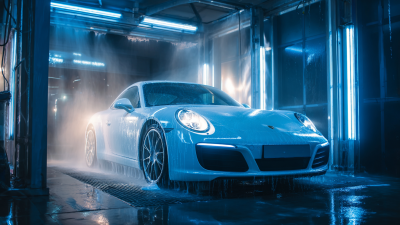
Choosing the right Automated Car Wash Systems from China requires more than comparing prices or glossy product images. Buyers must examine washing performance, equipment durability, software stability, and after-sales support. A reliable system should handle different vehicle sizes, local water conditions, and daily traffic without creating unnecessary delays.
Chinese manufacturers now offer rollover, tunnel, touchless, and brush-based solutions. Some models include license plate recognition, foam arches, high-pressure dryers, and water recycling units. Imagine a busy site at 6 p.m., with wet vehicles entering every few minutes. The system must clean consistently, protect mirrors, and recover quickly after minor faults. These practical details matter more than impressive brochures.
Supplier experience is equally important. Request factory videos, installation records, maintenance schedules, and performance data from comparable sites. Check component brands, electrical protections, spare-part availability, and technician response times. Independent testing and clear certification records can strengthen confidence, but documents should be verified carefully. Not every advertised feature performs equally well in real conditions. That deserves attention.
The best choice depends on climate, vehicle volume, labor costs, and available space. A compact rollover machine may suit a small station, while a tunnel system may serve a high-volume location better. Water recycling can reduce operating waste, although filters require regular cleaning. No system is perfect. Even advanced equipment can suffer from sensor errors, clogged nozzles, or poor installation. This guide compares leading Chinese options through practical evidence, technical value, and long-term reliability. It also highlights limitations, because honest evaluation supports better investment decisions.
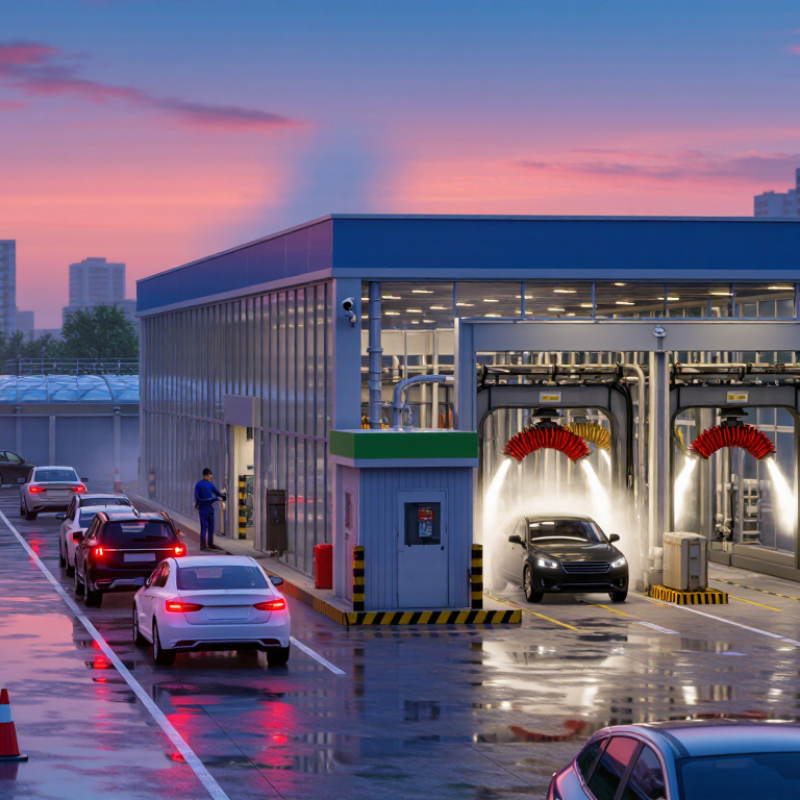
Chinese automated car wash systems stand out through scale, speed, and practical engineering. The China Association of Automobile Manufacturers reported 31.28 million vehicle sales in 2024. New-energy vehicles represented about 41% of that total. This volume creates demanding test conditions for wash equipment, especially in busy urban service centers.
The International Energy Agency reported that China accounted for more than 60% of global electric car sales in 2023. Chinese systems increasingly use gentler brush materials, adjustable water pressure, and sensor-based vehicle positioning. These features help protect cameras, charging ports, and low-clearance body parts. Many systems also support modular layouts, allowing operators to combine washing, drying, payment, and water recycling units. The details matter.
Cost efficiency is another strong point. Grand View Research estimated the global car wash services market at approximately 34 billion US dollars in 2023, with continued growth expected through 2030. Chinese manufacturers respond with compact designs, remote diagnostics, and locally available replacement components. That can reduce downtime in high-traffic locations. However, lower purchase prices do not guarantee better performance. Some systems still need software refinement, clearer technical documentation, and stronger after-sales training. Water-saving claims also require independent verification, because recycling efficiency varies with maintenance quality and local water conditions. Practical trials remain essential.
China produces several automated car wash systems for different site sizes, climates, and customer habits. Rollover systems wash one vehicle in a fixed bay. Their brushes move around the car, making them suitable for petrol stations and compact urban locations. They need careful brush pressure control to reduce paint marks.
Tunnel systems use a conveyor to move cars through separate washing stages. Foam arches, rotating brushes, high-pressure rinsing, and drying units can operate continuously. They suit busy sites with steady traffic. However, the conveyor length affects construction cost and maintenance access. A short tunnel may limit drying performance.
Touchless systems rely on high-pressure water and detergent instead of direct brushes. They are useful for vehicles with delicate finishes or uneven shapes. Robotic gantry systems combine programmed movement with sensors and adjustable spray arms. Some Chinese models also support self-service payment, license-plate recognition, and water recycling.
Real operating conditions matter. A dusty inland site may require stronger filtration. Coastal locations need corrosion-resistant frames and sealed electrical cabinets. Noise matters. I would inspect nozzle alignment, emergency stops, drainage, and software language before purchasing. Supplier documentation should state water use, power demand, cleaning capacity, and replacement-part availability.
A low price can hide weak after-sales support. That risk deserves attention. In field assessments, automated systems sometimes perform well during demonstrations but struggle with mud, cold water, or irregular vehicle sizes. Independent testing, installation training, and a realistic maintenance plan make the equipment more dependable.
The chart compares common automated car wash system types supplied by Chinese manufacturers. Values show representative throughput in vehicles per hour, calculated from typical published equipment ranges. Actual capacity varies according to vehicle size, wash-program settings, site layout, and operating conditions.
China’s leading automated car wash systems combine sensors, software, pumps, and water-recovery equipment. According to the China Association of Automobile Manufacturers’ 2024 data, China recorded 31.44 million vehicle sales. That scale encourages faster, more standardized washing operations.
At the entrance, laser sensors measure vehicle height, width, and position.
The control system then selects a washing route. It may use rotating brushes, high-pressure water, foam arches, or air dryers.
Touchless systems spray detergent first.
High-pressure nozzles then loosen dust from wheels, mirrors, and lower doors.
Friction systems use soft cloth materials that follow the vehicle’s body shape.
Conveyor models move cars through several fixed stages. In-bay systems keep the vehicle stationary.
Small details matter. A poorly calibrated sensor can leave mud behind.
Water management is another important feature. U.S. EPA WaterSense guidance reports that commercial automatic car washes can use 40 gallons or less per vehicle when designed efficiently. Chinese equipment often adds filtration, sediment tanks, and partial water recycling.
However, recycling is not unlimited. Dirty water can damage pumps and reduce cleaning quality.
Operators must check filters, chemical concentration, and nozzle pressure every day.
China’s rapid electric-vehicle growth also changes system design. The International Energy Agency reported that China represented about 60% of global electric-car sales in 2023. Wash systems therefore need careful wheel guidance and safer procedures around charging ports.
Automation reduces labor pressure, but it does not remove human responsibility. Real-world performance still depends on maintenance, site drainage, and staff training.
When comparing automated car wash systems from China, buyers should examine performance beyond the showroom demonstration. Start with throughput: how many vehicles can the system clean per hour without rushed cycles? Check brush material, spray pressure, dryer strength, and vehicle height limits. A reliable system should use sensors to detect position, mirrors, and unusual obstacles. Safety must remain consistent, even when the conveyor is busy.
Water management deserves close attention. Compare recycling capacity, filtration stages, tank size, and daily water consumption. Ask for measured energy data, not attractive estimates. Stainless steel construction can resist moisture, but weld quality and internal access matter too. Review the control panel, fault alerts, language options, and remote diagnostic functions. A simple interface helps operators respond faster. It may not look impressive.
Tips: Request a live test with different vehicle sizes. Watch the drying result near mirrors and rear windows. Ask for maintenance schedules, spare-part availability, installation training, and warranty response times. Read the technical drawings carefully. Small gaps in documentation can create expensive installation changes later. Also compare noise levels and drainage requirements, because these details affect customer comfort and site design.
A polished demo can hide weak support. Buyers should contact existing operators and ask how quickly service teams respond. Check whether performance data comes from independent testing or only factory claims. The cheapest system may become costly when brushes, pumps, or sensors need frequent replacement. I would also leave room for uncertainty: local water quality, climate, and operator habits can change real-world results. Test the system under your actual conditions whenever possible.
| Comparison Dimension | In-Bay Automatic Rollover | In-Bay Touchless System | Conveyor Tunnel System | Hybrid Friction System | Self-Service Automatic Bay |
|---|---|---|---|---|---|
| Typical Application | Petrol stations, dealerships, apartment complexes and small commercial sites | Premium cleaning locations where brush contact should be minimized | High-volume fuel stations, dedicated wash centers and fleet operations | Commercial sites seeking higher cleaning performance with controlled brush contact | Operators requiring flexible customer-selected wash programs |
| Vehicle Throughput | Approximately 8–15 vehicles per hour | Approximately 6–12 vehicles per hour | Approximately 30–120 vehicles per hour, depending on conveyor spacing and wash cycle | Approximately 25–80 vehicles per hour | Approximately 6–15 vehicles per hour per bay |
| Vehicle Movement | Vehicle remains stationary while the wash gantry moves around it | Vehicle remains stationary while high-pressure arches and dryers move around it | Vehicle is moved through the wash line by a conveyor | Vehicle is moved through the wash line by a conveyor or guided belt | Vehicle normally remains stationary while the selected program operates |
| Cleaning Method | Rotating brushes, water spray, detergent application and air drying | High-pressure water, chemical pre-treatment, spot-free rinse and air drying | Pre-soak, foam, friction brushes or cloth mitters, rinse, wax and drying stages | Combination of high-pressure spray and soft brushes or cloth cleaning materials | Customer-selected combinations of foam, high-pressure spray, rinse, wax and drying |
| Contact With Vehicle Surface | Yes; brush or cloth contact is part of the normal cycle | No direct brush contact during the standard wash cycle | Usually yes; contact depends on the selected tunnel configuration | Yes, with high-pressure pre-rinse and controlled brush or cloth contact | Usually no brush contact; configuration depends on the equipment package |
| Typical Water Consumption | Approximately 100–250 litres per vehicle without extensive water recycling | Approximately 120–300 litres per vehicle, depending on pressure, cycle length and recycling | Approximately 80–200 litres per vehicle when water reclamation is used | Approximately 80–180 litres per vehicle when water reclamation is used | Approximately 100–250 litres per vehicle, depending on customer-selected functions |
| Water Recycling Compatibility | Commonly available as an optional or integrated system | Commonly available; filtration quality is important because of high-pressure nozzles | Strongly recommended and widely integrated into commercial installations | Strongly recommended for reducing operating cost and wastewater discharge | Available as an optional package, subject to local water-quality requirements |
| Electrical Supply | Commonly configured for three-phase commercial power, often 380–415 V at 50 Hz | Commonly configured for three-phase commercial power, often 380–415 V at 50 Hz | Three-phase commercial power is normally required; final voltage depends on the installation country | Three-phase commercial power is normally required | Three-phase power is common for pumps, compressors and dryers |
| Installed Power Range | Approximately 15–35 kW, depending on pump and dryer configuration | Approximately 20–45 kW, especially when high-pressure pumps and dryers are included | Approximately 30–120 kW, depending on tunnel length, pump capacity and dryer quantity | Approximately 35–100 kW, depending on conveyor and drying equipment | Approximately 15–40 kW per bay |
| Recommended Site Area | Approximately 80–150 m², excluding large waiting or circulation areas | Approximately 90–170 m², including equipment clearance and vehicle positioning space | Approximately 300–1,000+ m², depending on conveyor length and traffic flow | Approximately 250–800+ m², depending on the number of cleaning stages | Approximately 60–120 m² per bay, excluding customer circulation areas |
| Initial Investment Level | Medium | Medium to High | High | High | Low to Medium |
| Labor Requirement | Low; periodic site inspection and chemical replenishment are normally required | Low; nozzle, pump and water-treatment monitoring are important | Low to Medium; traffic control, cleaning-area inspection and maintenance are normally required | Low to Medium; brush or cloth inspection is required more frequently | Low; remote monitoring and routine site maintenance can reduce staffing needs |
| Maintenance Priorities | Brush condition, drive rails, chemical dosing, pumps, sensors and dryers | High-pressure pumps, nozzles, filters, sensors, dryers and water-treatment equipment | Conveyor, chains, bearings, brushes, pumps, dryers, sensors and water-reclamation equipment | Brush or cloth condition, conveyor, pumps, chemical dosing and dryers | Pumps, hoses, valves, payment equipment, chemical dosing and safety sensors |
| Vehicle Size Flexibility | Suitable for most passenger cars, SUVs and light vans within the rated dimensions | Suitable for most passenger cars and SUVs; roof accessories require clearance checks | Suitable for a wide range of vehicles when conveyor dimensions and guides are correctly selected | Suitable for passenger cars, SUVs and selected light commercial vehicles | Suitable for passenger cars and SUVs within the bay's height, width and length limits |
| Average Wash Cycle | Approximately 5–10 minutes | Approximately 6–12 minutes | Approximately 3–8 minutes through the wash line, excluding queue time | Approximately 3–7 minutes through the wash line, excluding queue time | Approximately 5–15 minutes, depending on the selected program |
| Automation and Controls | PLC control, photoelectric sensors, vehicle-position detection and programmable wash recipes | PLC control, pressure monitoring, vehicle detection, programmable spray paths and fault alarms | PLC or industrial controller, conveyor monitoring, safety interlocks and centralized recipe management | PLC control, conveyor synchronization, brush-pressure control and programmable wash sequences | PLC control, touchscreen or payment terminal, program selection and remote fault notification |
| Safety Features to Verify | Emergency stops, obstacle detection, anti-collision sensors, door interlocks and overload protection | Emergency stops, pressure cut-off, obstacle detection, anti-collision sensors and bay interlocks | Emergency stops, conveyor safety switches, vehicle detection, anti-collision controls and evacuation access | Emergency stops, brush overload protection, conveyor safety switches and vehicle-position sensors | Emergency stop, door or bay interlocks, payment authorization controls and pump protection |
| Best Selection Criterion | Balanced investment, moderate traffic and a compact installation footprint | Low-contact washing, premium positioning and careful control of water pressure | Maximum throughput, multiple wash packages and long-term commercial capacity | Strong cleaning performance with high throughput and controlled surface contact | Low staffing, flexible customer operation and a smaller initial budget |
Selecting the best Chinese car wash supplier requires more than comparing prices. Businesses should examine the complete washing process, from vehicle entry to drying. Request operating videos from similar sites, not only factory demonstrations. A busy tunnel with muddy vehicles reveals more than a polished showroom.
Check brush materials, water recycling capacity, drying power, and control-system stability. Ask for measurable details, such as daily vehicle capacity and average maintenance intervals.
The supplier should provide installation drawings, spare-parts lists, training plans, and clear warranty terms. Local service coverage matters greatly when a sensor fails during a weekend rush.
Supplier audits can uncover important differences. Review production records, quality inspections, export experience, and customer references in comparable climates. Confirm that electrical components and safety features meet the requirements of the target market. Do not accept vague promises.
A written test protocol helps.
Businesses should also calculate long-term operating costs. A cheaper machine may consume more water, require frequent repairs, or create longer queues. Request a realistic estimate based on local electricity, labor, and water prices.
Ask whether software updates and replacement parts remain available after installation.
A polished proposal can still hide weak after-sales support. That risk deserves attention. Some buyers focus heavily on equipment appearance and underestimate operator training.
A practical supplier will discuss these weaknesses openly, explain possible downtime, and suggest preventive maintenance. The best choice is not always the most advanced system. It is the system that fits traffic volume, site dimensions, staffing, and local service conditions.