2026 Best Automated Car Wash Solutions for Global Buyers?
The automated car wash industry is rapidly evolving, catering to the demands of global buyers in 2026. Experts emphasize the importance of innovative solutions, particularly in efficiency and eco-friendliness. Renowned specialist, John Miller, states, “The future of the Automated Car Wash lies in smart technology and customer convenience.” His insight highlights a trend towards automation and sustainability.
In this competitive market, businesses must adapt to consumer preferences. Many buyers seek reliable systems that provide a thorough clean while minimizing water usage. A growing concern about environmental impact encourages innovation. Some solutions, however, may overlook the need for regular maintenance. This can lead to breakdowns and consumer dissatisfaction.
As we explore the best automated car wash solutions, we will examine both the advancements and the challenges. Potential buyers must understand the balance between technology and practicality. Not every automated system is perfect. Identifying these nuances is crucial for making informed decisions in this dynamic industry.
The Rise of Automated Car Wash Solutions in Global Markets
The global market for automated car wash solutions is rapidly evolving. According to a recent report by MarketsandMarkets, the market is projected to grow from $22.4 billion in 2021 to $34.3 billion by 2026. This growth reflects a rising demand for efficiency and convenience in vehicle maintenance. Automated car washes offer significant time savings, appealing to busy urban drivers who prefer speed.
Consumer preferences are shifting. Many customers seek eco-friendly options, driving innovation in the sector. Research shows that 75% of consumers consider environmental factors when selecting a car wash. Automated systems often use less water and biodegradable products, addressing this concern effectively. However, while many setups promise efficiency, inconsistency in cleaning results raises questions about quality.
Integration of advanced technologies like AI and IoT is notable. These technologies enhance the user experience, providing tailored services. Yet, challenges remain. Not all automated systems are designed equally; regular maintenance and updates are essential for optimal performance. Industry experts emphasize the need for ongoing research into consumer satisfaction and technological advancements. Addressing these factors will be crucial for sustained growth in the automated car wash market.
2026 Best Automated Car Wash Solutions for Global Buyers
| Feature |
Description |
Projected Cost (USD) |
Market Growth Rate (%) |
| Touchless Technology |
Uses high-pressure water jets and detergents. |
25,000 - 35,000 |
12% |
| Soft Touch Systems |
Utilizes foam and soft brushes for cleaning. |
20,000 - 30,000 |
10% |
| Hybrid Systems |
Combination of touchless and soft touch technologies. |
30,000 - 45,000 |
15% |
| Mobile Car Wash Apps |
Use of apps to schedule and manage car wash services. |
Variable |
20% |
| Water Recycling Systems |
Technologies that recycle water used during the wash. |
15,000 - 25,000 |
18% |
Key Technological Innovations in 2026 Automated Car Wash Systems
As we look toward 2026, automated car wash systems are set to undergo significant enhancements. Key technological innovations are emerging, aimed at improving efficiency and user experience. Smart sensors will become a hallmark of these systems. They will provide real-time data about each vehicle, ensuring optimal cleaning without damaging the surface. Additionally, eco-friendly detergents and water recycling systems are becoming more commonplace. These features address environmental concerns while maintaining high performance standards.
Another notable advancement is the use of AI and machine learning. These technologies help systems learn from user preferences, allowing for tailored wash cycles. Imagine a car wash that adjusts its method based on the car's condition and previous service history. However, there are still challenges to overcome. Not all facilities can integrate such advanced systems. Some older structures may struggle to accommodate these innovations.
User experience will also extend beyond the wash itself. Payment systems are becoming more streamlined. Digital payments and membership options are on the rise. Yet, reliance on technology may lead to gaps in service for some customers. It's essential to strike a balance between innovation and accessibility. Regular feedback loops will help guide ongoing improvements, ensuring that all users benefit from technological advancements in car wash solutions.
Market Trends: Consumer Preferences and Spending on Car Wash Services
In recent years, consumers have shown a notable shift in their preferences for car wash services. Many now prefer automated solutions that save time and effort. With busy lifestyles, a quick and efficient wash is appealing. The demand for advanced technology, such as touchless systems, is rising. Many users appreciate the gentle cleaning methods these systems provide. This trend highlights a growing need for convenience in the car wash industry.
Spending patterns are also changing. More consumers are willing to invest in premium car wash options that promise superior results. Eco-friendly products are increasingly popular. People are more aware of environmental impact, seeking services that use less water and biodegradable detergents. Surveys indicate that customers prioritize safety features and durability of automated systems. Yet, not all automated services meet these expectations. Some users report dissatisfaction with less effective cleaning or longer wait times.
The varied consumer experience suggests a need for continuous improvement in the market. Car wash providers must focus on understanding feedback and enhancing service quality. This can lead to better customer loyalty and satisfaction. Addressing issues like inconsistent performance will be critical for future growth. Acknowledging customer concerns can guide the development of more efficient and reliable automated car wash solutions.
2026 Best Automated Car Wash Solutions: Market Trends
Comparison of Leading Automated Car Wash Brands and Their Features
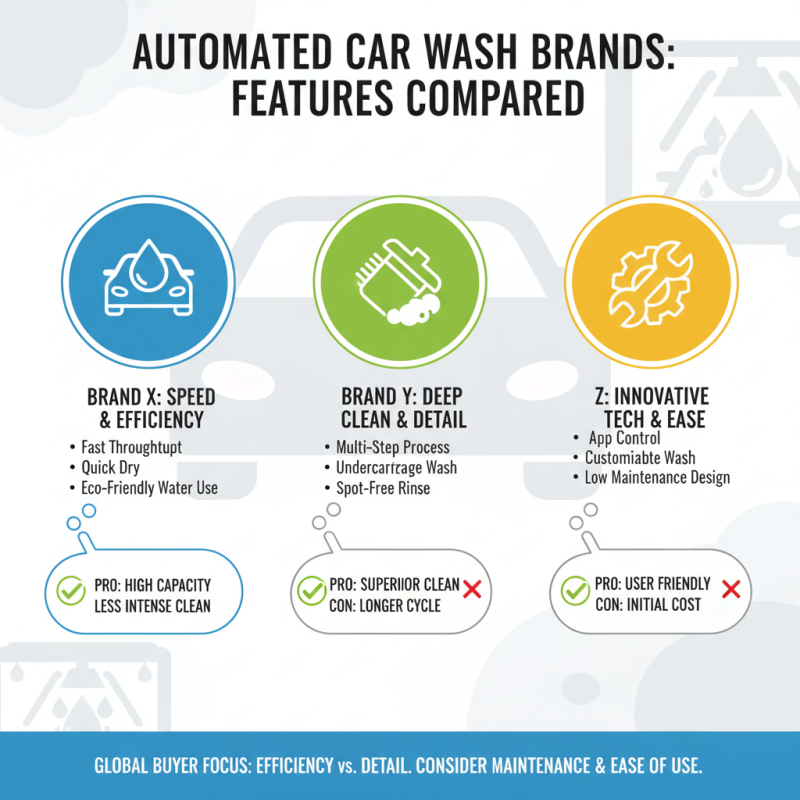
When exploring automated car wash solutions for global buyers, various brands stand out in terms of features and performance. Each offers unique technology tailored to different needs. Some systems focus on high efficiency and speed, while others prioritize thorough cleaning and attention to detail. For instance, one brand provides a multi-step cleaning process, from pre-soak to drying, ensuring a spotless finish every time. Users often commend these features, though they may express concerns about maintenance and ease of use.
Another essential consideration is the software integration used in these systems. Advanced options include user-friendly interfaces and remote monitoring capabilities. Technology can enhance the overall experience, but not all brands deliver consistently. Common issues include glitches or connectivity problems, which can frustrate users. Feedback indicates that potential buyers should assess reliability alongside innovative offerings.
Lastly, eco-friendly practices are gaining importance. Many brands emphasize water conservation and biodegradable soaps. However, the effectiveness of these eco-solutions can vary. Some users report that while the products are better for the environment, they don't always meet their expectations for cleaning power. It’s crucial for buyers to reflect on their priorities and choose a brand that balances innovation with practicality.
Sustainability in Automated Car Wash Operations: Efficiency and Water Usage
Automated car wash systems are evolving. They prioritize sustainability. Efficiency in water usage is crucial. Many systems now recycle water. This helps reduce waste. The technology captures and treats water for reuse. It also minimizes chemical runoff into the environment.
Despite advancements, challenges remain. Not all systems achieve optimal efficiency. Some still consume excessive water. Certain locations may lack access to proper recycling methods. It’s vital for operators to regularly assess their processes. This ensures they meet sustainability standards.
Consumer awareness is growing. People appreciate eco-friendly practices. They often seek out wash services that reduce water use. Educating the public on these technologies is necessary. Transparency in operations builds trust. Sustainable practices should be a primary focus for future growth in the industry.